The American Empire
Washington would be proud of the emerging American Empire. He warned of foreign entanglements and the risks of getting wrapped up in the ancient power struggles of Europe, where the United States would be used as a pawn on the global chessboard of an established power. Times have changed.
We are the Entaglement
We are the Danger
Early in our nation's history, foreign entanglements would have brought an end to our blossoming nation. We would have certainly been the tail wagged by whatever European dog wrapped us around their finger. However, our founders did not diminish the expansion of our own powers. By the time the last founding father to be president, James Monroe, left office in 1825, the United States had already doubled in size.
Is there really that big of a difference between conquering land controlled by powerful civilization contributing nations from Europe in the continental United States and conquering Cuba today? The former is far more difficult, way more risky. Why would we let a “nation” exist right outside our borders that harms both our interests and its own people? We are the greatest superpower in world history… these broken places need fixing, and they will soon be our territories. Spare me the self-governance, sovereign nation BS. Places like Cuba are a great harm to the region (OUR REGION) and their own people. Don’t get me wrong, we owe these people nothing. This is NOT a humanitarian effort. This is a do what’s best for the United States of America effort. The fact that it is win-win is great, and I want good things for all the people of these nations. But their liberation is a secondary goal to securing the interests of the USA.
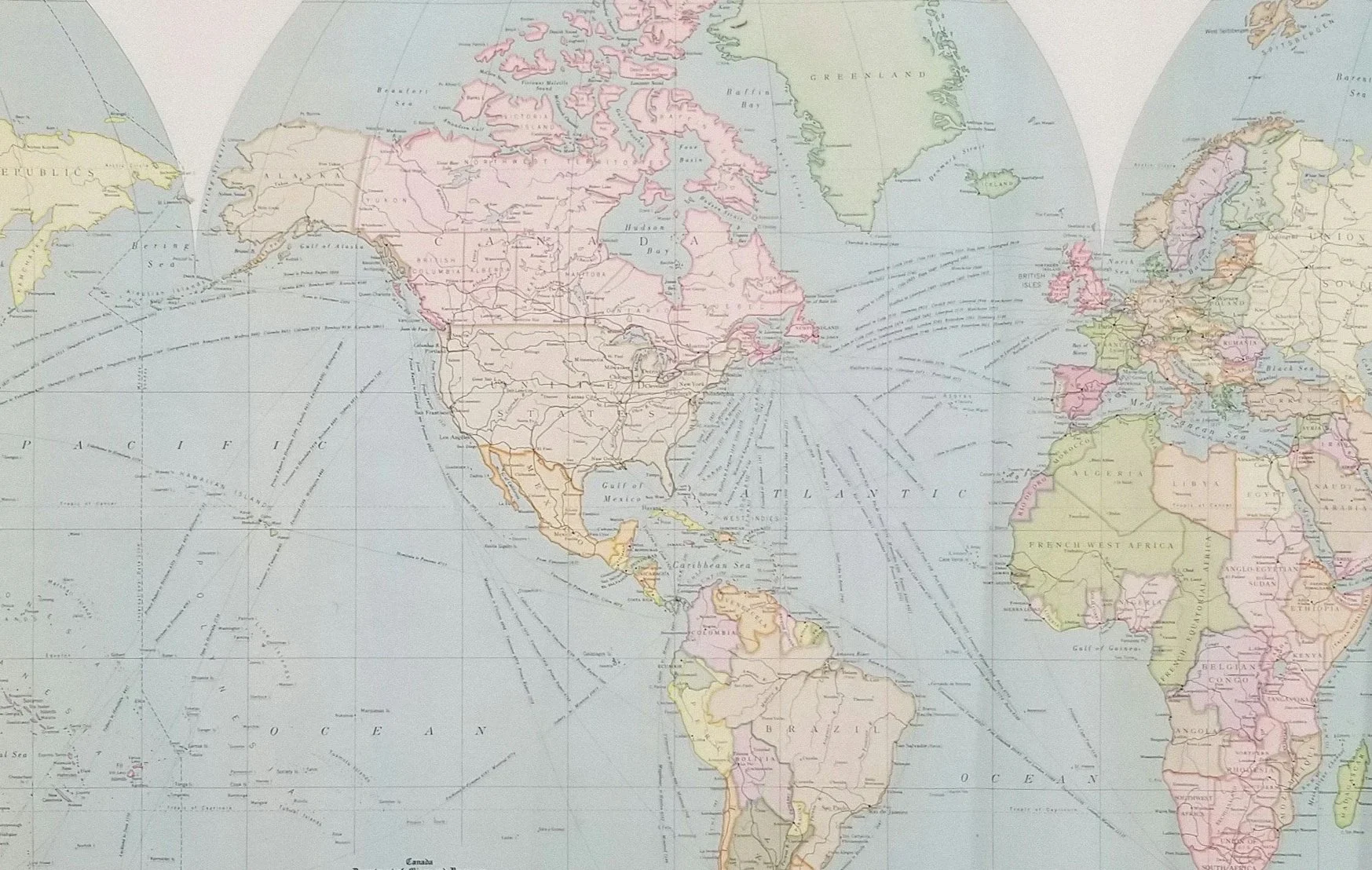
Mexico is a failed state run by warlords. Canada has been co-opted and taken over by global interests. Greenland is to the Northeast as Alaska is to the Northwest. We are coming for more than most would ever consider considering.
Again, our founders’ concerns about entanglements with foreign nations were centered around their understanding that the United States was the small fish in their big pond. Such relationships with other nations would serve to expand those nations' power and diminish our own. Our founders were right to focus on expanding the power and control of our nation. In 2026, WE ARE THE POND, and we should still be focused on putting American Power First. We should still be expanding our influence and putting our interests before all others.
If the founders were still in charge, you would have to be a special type of dullard, a real simpleton, to think they would allow hostile nations and organizations to be operating in our sphere of influence. Those threatening our citizens and interests would get promptly introduced to the fury that the Islamic Barbary Pirates came to know so well on the “Shores of Tripoli.” Ooh-rah! Thomas Jefferson's campaign slogan, “Millions in Defence before Pennies in Tribute,” still rings true in the American spirit today. If our founding fathers were running things, Mexico would get a crisp reminder of why the United States Marine Corps Hymn starts with the “Halls of Montezuma.”
We are heading back to the values of our founding. We are re-establishing the dominance of Washington and Jefferson. The future is bright for all those who want to do business with the United States, and non-existent for those who get in our way. Speaking of cogs in the wheel, hey East Alaska… Americas Hat, I mean.. Snow Mexico… I mean, first losers at your own sport… Frozen Communists… I mean, Canada, go ahead… fuck around… make allegiances with China… see how that goes.
The time of the powerful submitting to the powerless is over. All those who deluded themselves into thinking that was the moral way, the high road, now have all the evidence they could ever want that the results are 180 degrees from their thesis. The people have always suffered when the popper is in the palace, when those who have not earned the right to be powerful are given reigns they do not deserve. We the people, the greatest people and culture the world has ever known, are taking power again, and we are going to use it; Bigly.
An American Empire is emerging.
We will be the Best of Friends and the most Terrible of Enemies.
It is a time for choosing.
Below are many of the notable comments our founders had on foreign influences:
George Washington
"It is our true policy to steer clear of permanent alliances with any portion of the foreign world."
"Against the insidious wiles of foreign influence (I conjure you to believe me, fellow-citizens,) the jealousy of a free people ought to be constantly awake; since history and experience prove, that foreign influence is one of the most baneful foes of Republican Government."
"The great rule of conduct for us, in regard to foreign nations, is, in extending our commercial relations, to have with them as little political connection as possible. So far as we have already formed engagements, let them be fulfilled with perfect good faith. Here let us stop."
"Permanent, inveterate antipathies against particular nations and passionate attachments for others should be excluded."
"A passionate attachment of one nation for another produces a variety of evils. Sympathy for the favorite nation, facilitating the illusion of an imaginary common interest in cases where no real common interest exists, and infusing into one the enmities of the other, betrays the former into a participation in the quarrels and wars of the latter without adequate inducement or justification."
"Why quit our own to stand upon foreign ground? Why, by interweaving our destiny with that of any part of Europe, entangle our peace and prosperity in the toils of European ambition, rivalship, interest, humor or caprice?"
Thomas Jefferson
"Peace, commerce, and honest friendship with all nations—entangling alliances with none."
"I have ever deemed it fundamental for the United States, never to take active part in the quarrels of Europe. Their political interests are entirely distinct from ours. Their mutual jealousies, their balance of power, their complicated alliances, their forms and principles of government, are all foreign to us. They are nations of eternal war."
"We are firmly convinced, and we act on that conviction, that with nations as with individuals our interests soundly calculated will ever be found inseparable from our moral duties, and history bears witness to the fact that a just nation is trusted on its word when recourse is had to armaments and wars to bridle others."
"I sincerely join you in abjuring all political connection with every foreign power; and tho I cordially wish well to the progress of liberty in all nations, and would forever give it the weight of our countenance, yet they are not to be touched without contamination from their other bad principles."
John Adams
"As often as Elections happen, the danger of foreign Influence recurs."
In a 1787 letter: "I know too that it is a maxim with us, and I think it a wise one, not to entangle ourselves with the affairs of Europe."
Alexander Hamilton
"Foreign influence is truly the Grecian horse to a republic. We cannot be too careful to exclude its influence."
"One of the weak sides of republics, among their numerous advantages, is that they afford too easy an inlet to foreign corruption."
"Hence it is that history furnishes us with so many mortifying examples of the prevalency of foreign corruption in republican governments."
"The causes of hostility among nations are innumerable... the love of power or the desire of preeminence and dominion—the jealousy of power, or the desire of equality and safety."
James Madison
"The means of defence against foreign danger have been always the instruments of tyranny at home."
"Foreign powers will intermeddle in our affairs, and spare no expence to influence them. Persons having foreign attachments will be sent among us & insinuated into our councils, in order to be made instruments for their purposes."
"Great Britain, above all other nations, ought to be dreaded and watched, as most likely to gain an undue and pernicious ascendency in our country."